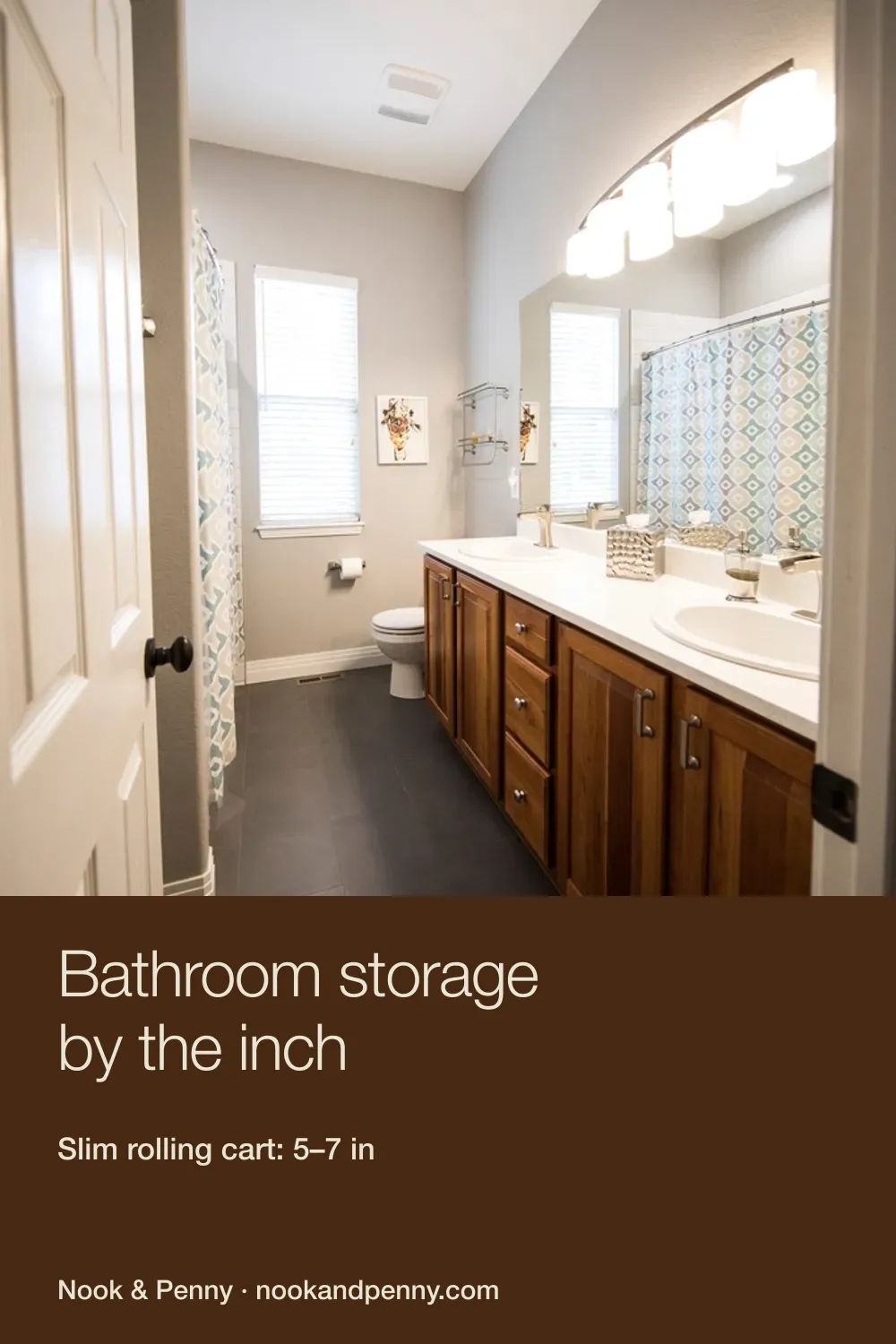
Bathroom storage by the inch
Bathroom storage chosen by the space you actually have: what fits in a 4-inch gap, behind the door, over the toilet and under the sink — with sizes and prices.
What it costs
| Slim rolling cart (5–7 in wide) | $22 |
| Over-the-toilet shelf | $28 |
| Two stacking under-sink drawers | $25 |
| Over-the-door hooks | $9 |
| Tension rod for the shower | $10 |
| Total | $94 |
Rough US prices at the time of review. Prices change — check before you buy, and skip what you already own.
Measure the empty spots first, then buy to fit: a 5–7 inch gap beside the toilet takes a slim rolling cart, the wall above the tank takes a freestanding shelf, and the space under the sink takes stacking drawers. All five fixes below total about $94 and need no drilling.
Storage by the space you have
| Space | Typical size | What fits | Cost |
|---|---|---|---|
| Gap beside the toilet or vanity | 4–8 in | Slim rolling cart (5–7 in wide) | ~$22 |
| Wall above the toilet tank | About 24 in wide | Freestanding over-the-toilet shelf | ~$28 |
| Under the sink | Around the pipes, usually 20–30 in wide | Two stacking drawers, one on each side of the pipe | ~$25 |
| Back of the door | 1–2 in deep | Over-the-door hooks or a slim rack | ~$9 |
| Inside the shower | Between two walls | Tension rod with hanging baskets or S-hooks | ~$10 |
| Above the door | 6–10 in | One shelf for spare rolls and towels (needs screws) | ~$15 |
Step by step
- Measure every gap with a tape measure: beside the toilet, the vanity, the tub; the wall above the tank; under the sink around the pipe.
- Empty and sort. Daily items, weekly items, backups. Throw away the expired things.
- Daily items within reach: the cart beside the sink or toilet, the medicine cabinet.
- Weekly items: under the sink in the drawers.
- Backups: the over-the-toilet shelf’s top shelf, or above the door, in closed bins.
- Towels: hooks on the back of the door hold more than a towel bar and dry faster.
Moisture matters
Bathrooms are humid, and storage that traps moisture can grow mildew. The EPA’s mold guide notes that wet materials dried within 24–48 hours usually won’t grow mold — so run the fan or open the door after showers, and choose plastic, metal or sealed wood rather than bare cardboard or untreated wicker for anything near the shower.
Make it look calm
- Decant hand soap and cotton pads into matching containers.
- One tray on the counter corrals everything that stays out.
- Closed bins for backups; open shelves only for towels and one plant.
- For the full makeover, see the $121 tiny bathroom plan.
What not to do
- Don’t block the toilet tank lid with a shelf you can’t move — plumbers (and you) need to open it.
- Don’t store spare paper rolls in open bins by the shower. Steam makes them soft.
- Don’t use adhesive hooks on grout for anything heavy; they fail when humidity rises.
More: small kitchen storage for renters and tiny closet organization.
Sources
Quick answers
How do you add storage to a small bathroom without drilling?
Use a slim rolling cart in a gap, a freestanding over-the-toilet shelf, over-the-door hooks, a tension rod in the shower and stacking drawers under the sink.
What should not be stored in a bathroom?
Things that don't like humidity: most medications (unless the label says otherwise), extra towels for months at a time, makeup brushes and paper goods in open bins.