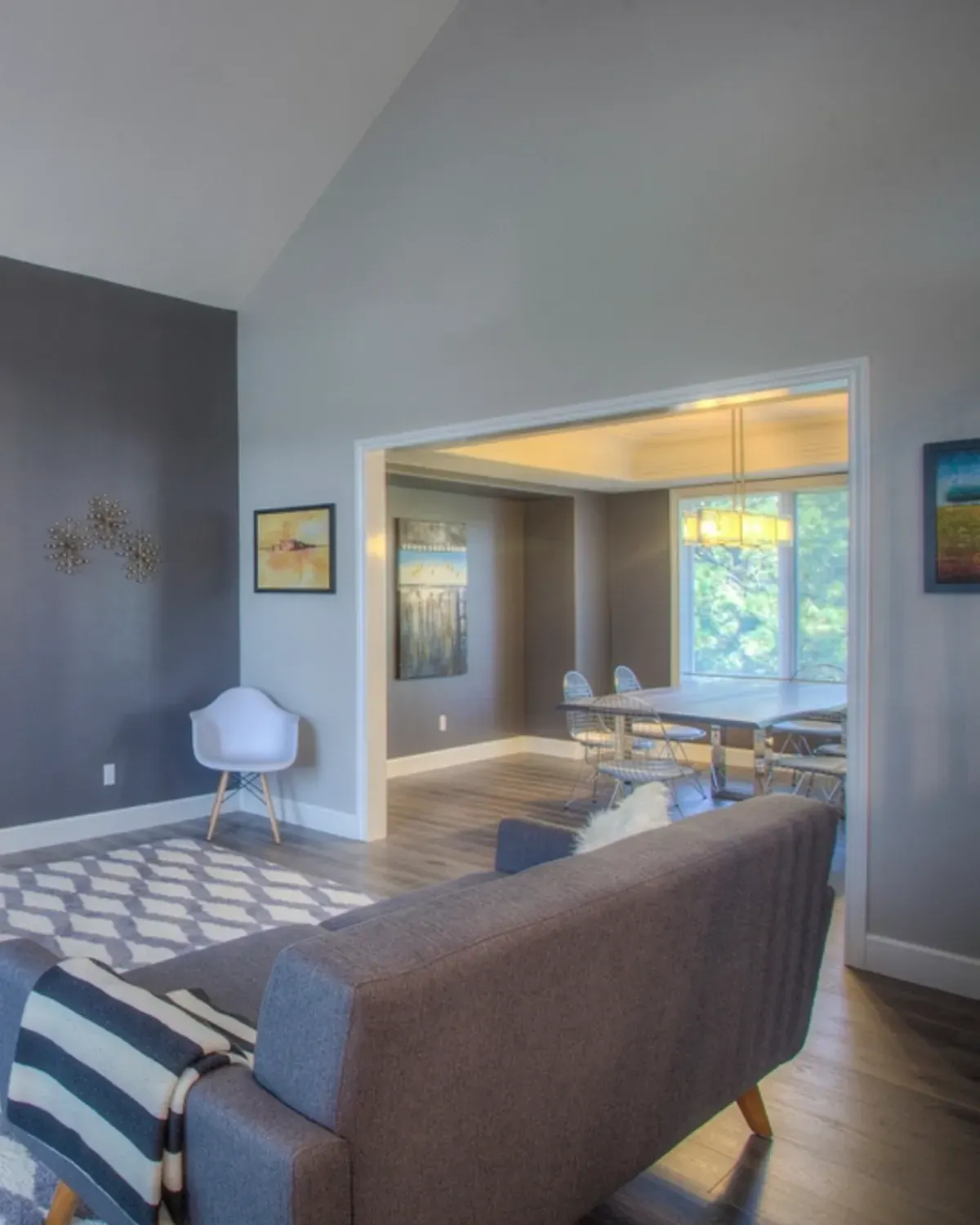
No entryway? Make one
When the front door opens straight into the living room, these eight ideas create a real entryway — hooks, a slim shelf, a rug and smart storage under $130.

What it costs
| Slim wall-mounted console shelf | $35 |
| Round mirror | $30 |
| Row of wall hooks | $15 |
| Small washable runner | $25 |
| Key tray + catch-all bowl | $10 |
| Slim shoe rack | $12 |
| Total | $127 |
Rough US prices at the time of review. Prices change — check before you buy, and skip what you already own.
To fake an entryway, mark the zone with a runner, add a 6-inch-deep floating shelf with a mirror above it and put a row of hooks on the wall. The full setup costs about $127 and fits in a couple of square feet.
In many small apartments the front door opens straight into the living room, so coats end up on the sofa and keys… somewhere.
1. Mark the zone with a runner (~$25)
A small washable runner just inside the door tells everyone: this is the entry. It also catches dirt before it reaches the rest of the apartment. Put a non-slip pad under it: a sliding runner by the door is a classic trip hazard, and the CDC counts falls as the leading cause of injury for older adults.
2. A slim floating shelf instead of a console (~$35)
A full console table is often too deep. A 6-inch-deep floating shelf at about 32 inches high gives you a landing spot for keys and mail without blocking anything.
3. A mirror above it (~$30)
A round mirror above the shelf adds light by the door, makes the space feel bigger and gives you that last look before you leave.
4. Hooks at two heights (~$15)
A rail of hooks for coats and bags at about 60–66 inches, plus a lower set for kids or tote bags if you need them. Five hooks is plenty — more just invites a pile.
5. A tray for keys (~$10)
A small tray or bowl on the shelf is where keys, earbuds and sunglasses live. You’ll never search for keys again.
6. Shoes under, not around (~$12)
A slim two-tier shoe rack fits under the shelf or tight beside the door. Rule of thumb: only the shoes you wear this week live there.
7. Create a “wall” with furniture (free)
If your sofa faces away from the door, its back already makes a mini wall. A bookshelf at a right angle to the door does the same — see studio zoning tricks.
8. Light it (free–$20)
A small battery lamp or a plug-in sconce by the door makes coming home feel nicer and gives you light to find your keys.
The 15-minute version
No budget at all? Clear one stretch of wall by the door, put down a bath mat or small rug, and use a bowl you already own for keys. The habit matters more than the furniture.
More storage ideas: small kitchen storage for renters.
Sources
Quick answers
How do you create an entryway when the door opens into the living room?
Use a rug to mark the zone, add hooks and a slim shelf at the wall next to the door, and if possible place a bookshelf or the back of the sofa to form a 'wall' between entry and living room.
What's the minimum depth for an entry console?
Around 6 to 10 inches is enough for keys, mail and a small lamp. Floating shelves this depth won't block the door swing.