The right sofa for a small room
Pick a sofa that fits a small living room: width, depth and arm sizes for apartment sofas and loveseats, the doorway delivery check and the 2/3 wall rule.

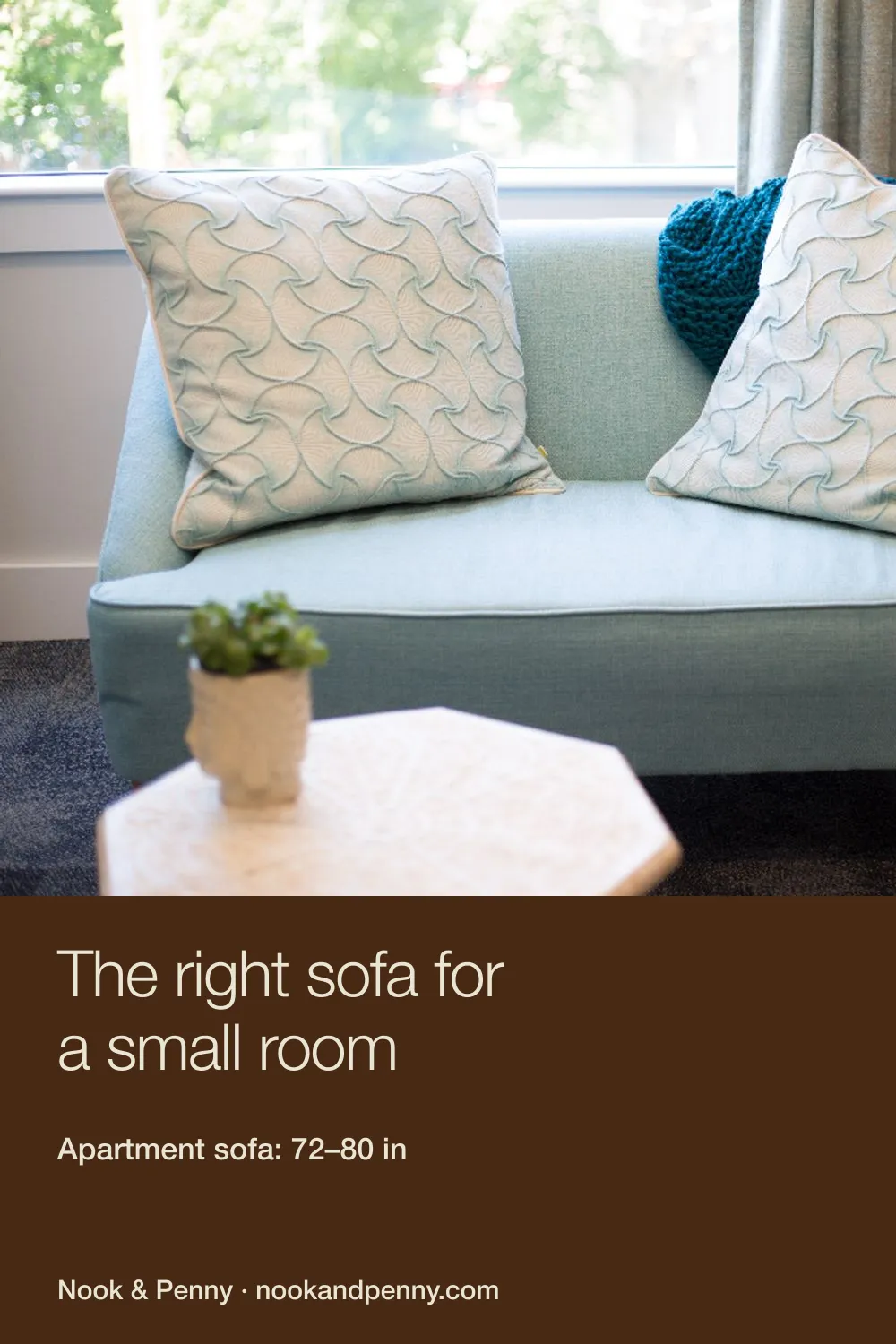
For most small living rooms, the right sofa is an apartment sofa 72–80 inches wide and 32–36 inches deep, or a loveseat of 48–72 inches if the wall is under about 9 feet. Keep the sofa to about two-thirds of the wall and check that it fits through the door before you buy.
Size chart
| Type | Width | Depth | Seats | Best for |
|---|---|---|---|---|
| Loveseat | 48–72 in | 30–36 in | 2 | Walls under 9 ft, studio living zones |
| Apartment sofa | 72–80 in | 32–36 in | 3 (snug) | Most small living rooms |
| Standard sofa | 80–96 in | 35–40 in | 3 | Walls of 11 ft and more |
| Sleeper sofa | 72–90 in | 36–40 in closed; ~90 in open | 2–3 | Only if you have the open length — see sofa bed vs daybed vs Murphy bed |
The three rules
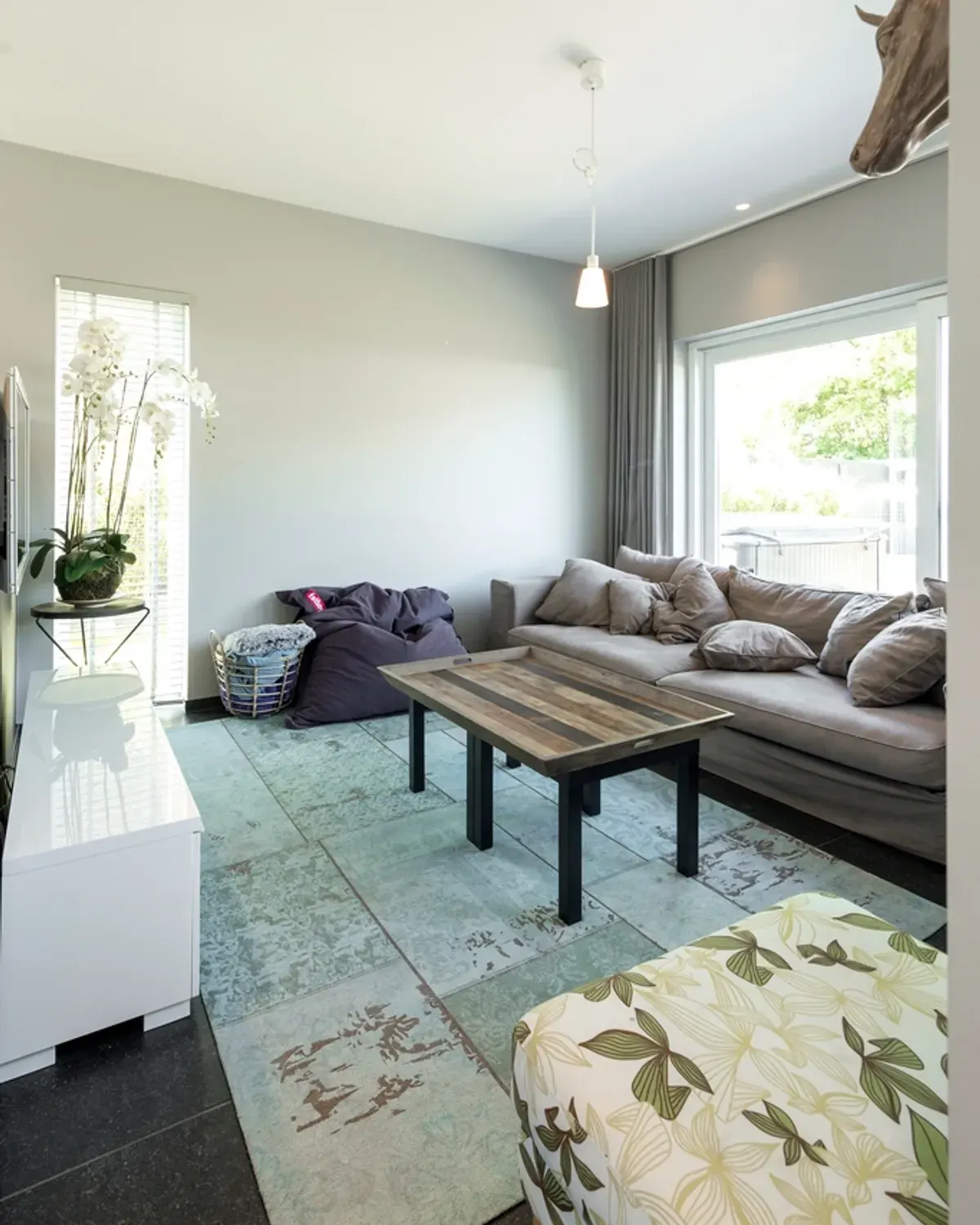
- Two-thirds of the wall. On a 10-ft (120 in) wall, the sofa should be about 80 inches or less, leaving room for a side table or plant and space to walk.
- Leave the path. The main walkway past the sofa should stay 30–36 inches wide. For reference, the ADA standards use 36 inches for an accessible route — a good target for the main path. The clearance cheat sheet has every number.
- Depth matters as much as width. A 40-inch-deep sofa in a 10-ft-wide room leaves less floor than a 34-inch one — and you’ll feel those 6 inches every day.
Details that make a sofa “small”
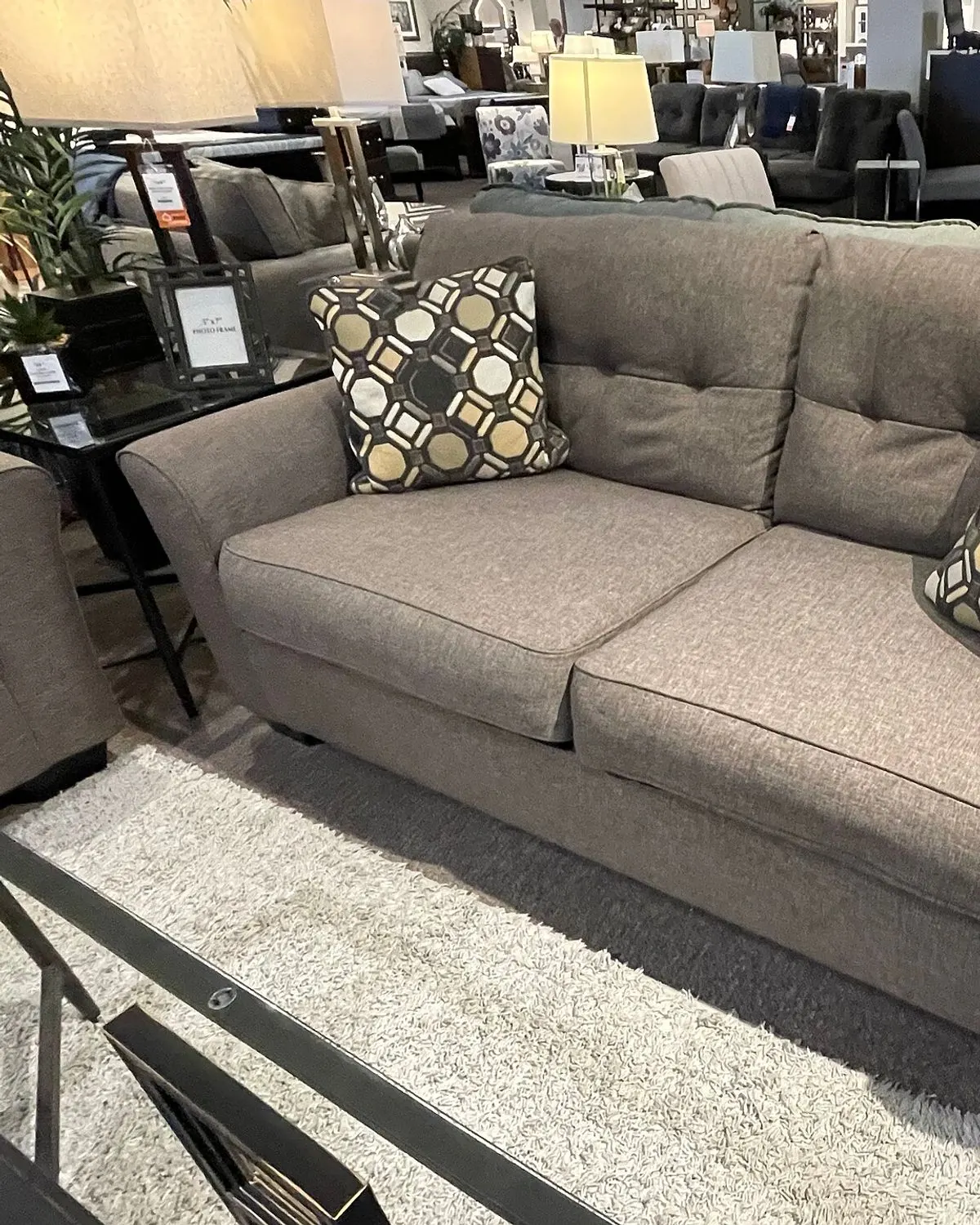
- Arms: track arms (2–5 in) instead of rolled arms (8–12 in) give you more seat for the same width. A 76-inch sofa with thin arms seats about as much as an 84-inch one with fat arms.
- Legs: visible legs show the floor underneath, which makes the room read bigger.
- Back height: a low back (around 30–32 in) keeps the view across the room open, important if the sofa floats in a studio.
- Seat depth: 20–22 inches suits most people; deeper seats need more pillows and more room.
The delivery check (do it before you order)
- Measure the sofa: width, height, depth and the diagonal depth (from the top back corner to the front bottom edge).
- Measure every opening on the way in: building door, elevator, hallway, apartment door, any tight corner.
- Rule of thumb: if the diagonal depth is smaller than the door width, the sofa can usually be tilted through.
- No luck? Look for sofas with removable legs, removable arms or “sofa in a box” designs that arrive in pieces.
Example
An 11×12 ft living room, sofa wall 132 inches. Two-thirds is 88 inches, but a door sits at one end, so the usable wall is 110 inches → a 76-inch apartment sofa with track arms. Depth 34 inches, then 16 inches to a 32-inch round coffee table, then 4 ft to the TV wall. The walkway behind the coffee table stays at 36 inches.
What not to do
- Don’t buy a sectional for a small room unless it’s a compact one under 80 inches on the long side.
- Don’t measure only the room — the doorway is where most small-apartment sofas fail.
- Don’t push it against the wall by default. Pulled a few inches out, it looks more intentional — see 9 ways to make a small room look bigger.
Sources
Quick answers
What size sofa is best for a small living room?
Usually an apartment sofa 72–80 inches wide and 32–36 inches deep, or a loveseat 48–72 inches wide if the wall is under about 9 feet. The sofa should take no more than two-thirds of the wall.
What is the difference between an apartment sofa and a loveseat?
An apartment sofa is a full sofa scaled down, usually 72–80 inches and seating three. A loveseat is shorter, usually 48–72 inches, and seats two.
Will a sofa fit through my door?
Measure the door width, the hallway width and the diagonal of the sofa (back top to front bottom). If the diagonal is less than the door width, it can usually be tilted through.