Make a small room look bigger
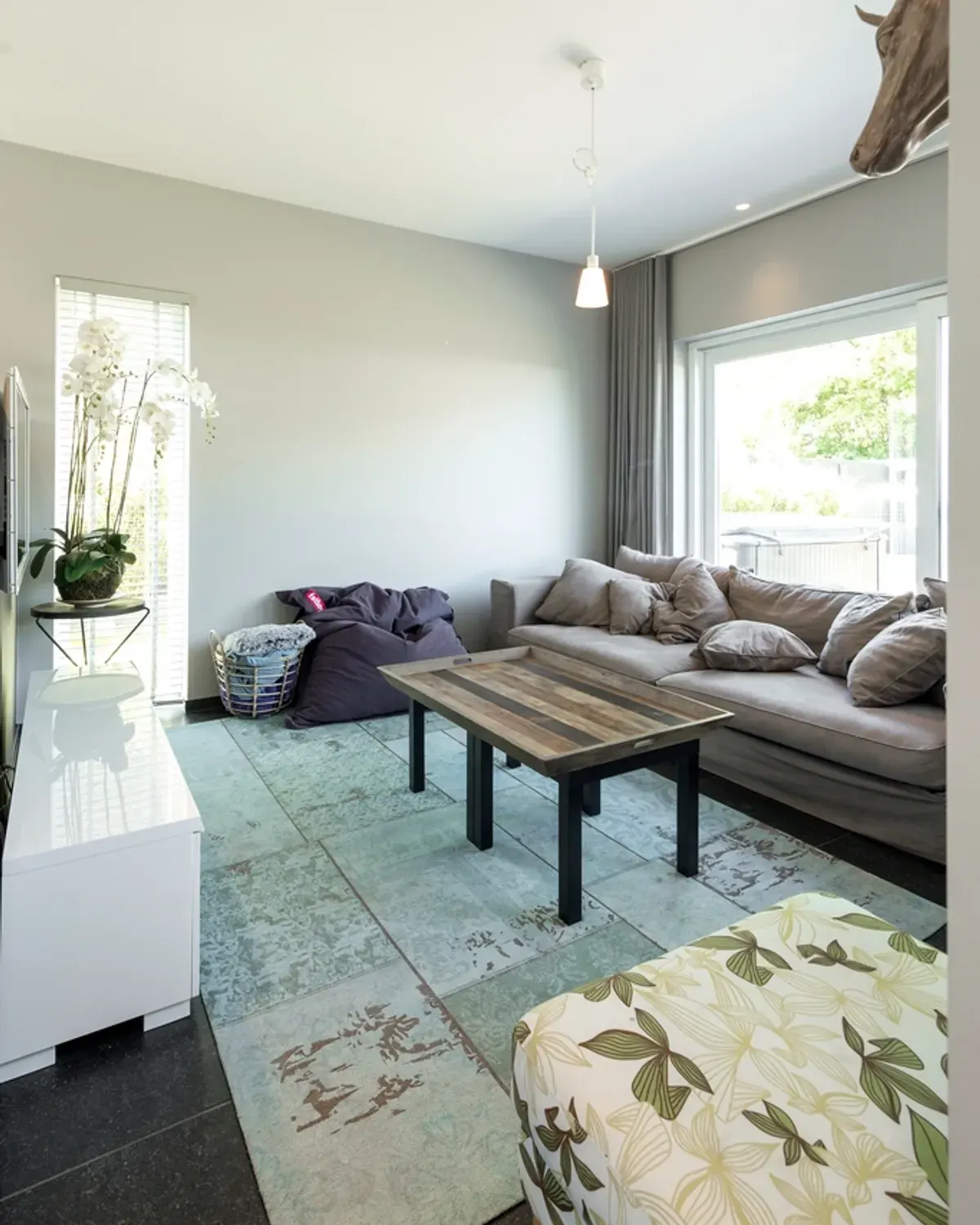
The visual tricks designers use to make small rooms look bigger — curtains, mirrors, leggy furniture and color — most of them free.
What it costs
| Curtain rod mounted high + long panels | $38 |
| Large round mirror | $35 |
| Acrylic or glass side table | $15 |
| Total | $88 |
Rough US prices at the time of review. Prices change — check before you buy, and skip what you already own.
To make a small room look bigger, hang the curtains high and wide, use a rug the furniture can stand on, add one big mirror and keep the walking path clear. Most of it is free, and the rest costs about $88.
You can’t knock down a wall in a rental, but you can trick the eye — and the eye decides how big a room feels.
Which tricks matter most
Not every trick is worth the same. This is how we’d rank them for a typical 10×12 ft rental living room, by how much they change the room per dollar:
| Trick | Cost | Time | Effect on how big the room feels |
|---|---|---|---|
| Clear the walking path | Free | 20 min | Very high |
| Curtains high and wide | ~$38 | 1 hour | Very high |
| Rug the furniture can stand on | ~$45–$75 | 10 min | High |
| Light the dark corners | Free–$20 | 15 min | High |
| One big mirror by the window | ~$35 | 15 min | Medium–high |
| Furniture on legs | Free–$20 | Varies | Medium |
| Walls, curtains and big pieces in one color family | Free–$40 | 1 afternoon | Medium |
| Clear (acrylic or glass) side table | ~$15 | 5 min | Low–medium |
| Trim painted to match the walls | Paint + permission | 1 day | Medium |
Not sure where your room stands? The 1-minute “does your living room look small?” test scores it and tells you which of these to do first.
1. Hang curtains high and wide (~$38)
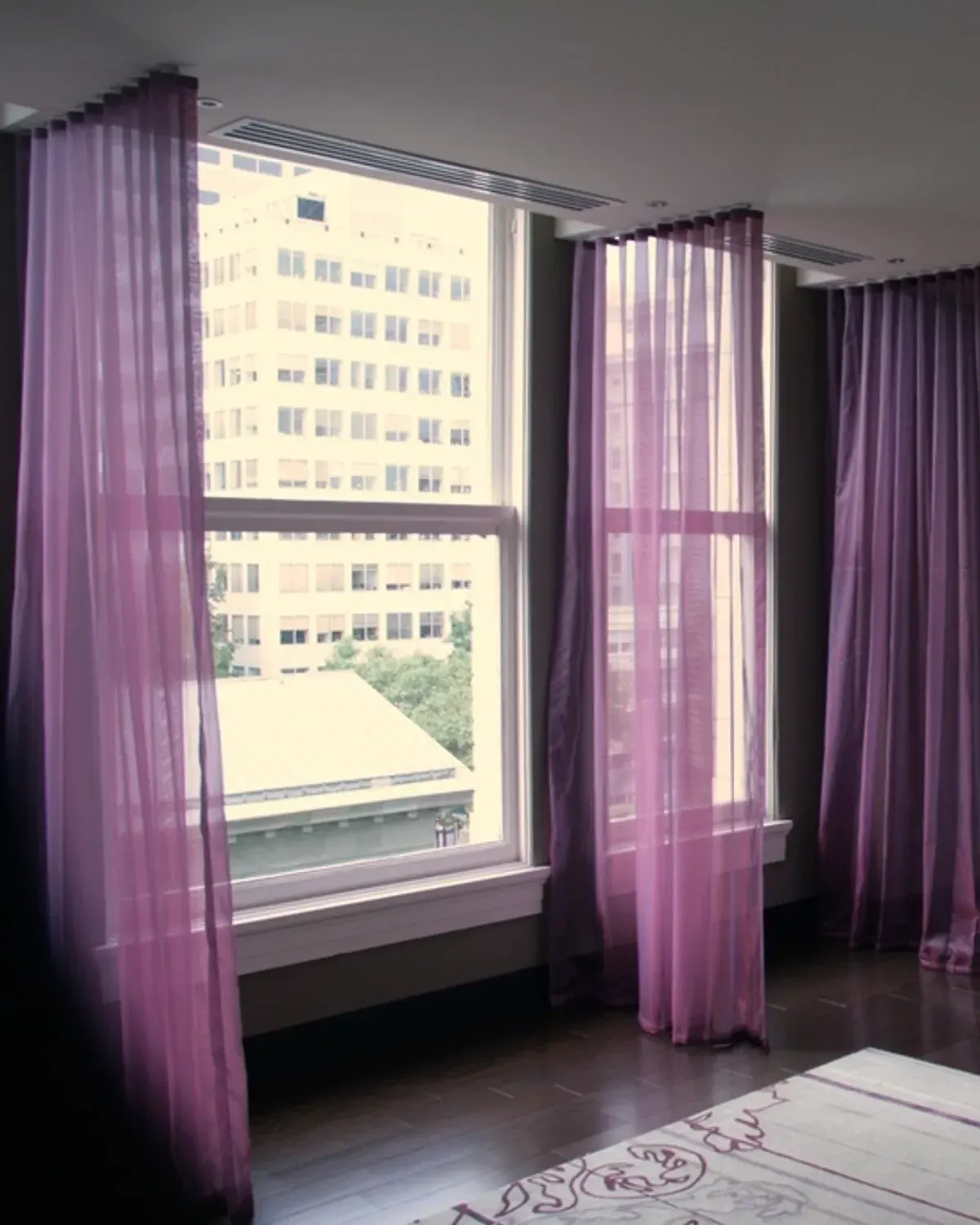
The #1 trick, and we’ll keep repeating it. Mount the rod near the ceiling and extend it 8–10 inches past the window on each side. Long panels draw the eye up and make the window look huge.
2. Show more floor (free)
Furniture on legs lets the eye see the floor continue underneath, so the room reads as bigger. Swap a skirted sofa for one with legs, or lift a dresser onto new legs.
3. Use one big mirror, not many small ones (~$35)
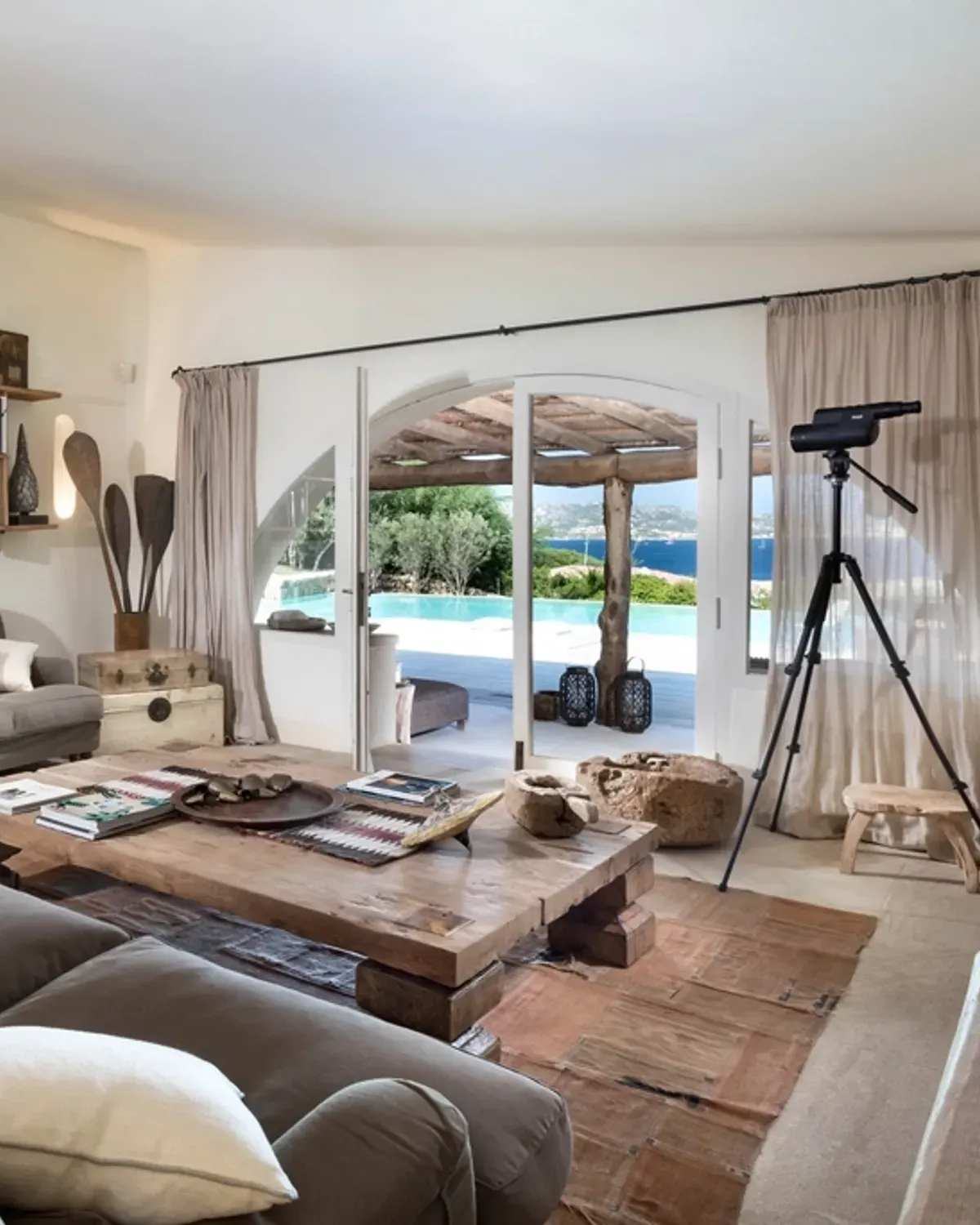
A large mirror opposite or next to a window doubles the light and the view. Many small mirrors just look busy.
4. Go clear (~$15)
An acrylic or glass side table or coffee table does its job without blocking any view. Your eye passes right through it.
5. Match your walls to your curtains (free)
When curtains, walls and big furniture are in the same color family, there are fewer “edges” for the eye to stop at. Fewer edges = bigger room.
6. Paint the trim the same color as the walls (with permission)
High contrast white trim against colored walls outlines every corner. Painting trim the same color (in a satin finish) blurs the edges. If you can’t paint, skip this one.
7. Choose fewer, bigger pieces (free)
It feels counterintuitive, but a few larger pieces make a small room calmer than lots of small ones. One big piece of art instead of a gallery wall. One big rug instead of two small ones.
8. Light the corners (free–$20)
Dark corners shrink a room. A floor lamp or even a plug-in uplight in the darkest corner pushes the walls “out.”
9. Keep the path clear (free)
The walking line from the door to the window should be totally free of furniture. When you can walk straight in, your brain reads the room as spacious.
Myths that make rooms look smaller
“Small rooms need small furniture.” A room full of mini pieces looks like a dollhouse. One normal-size sofa on legs beats a loveseat plus two small chairs. What matters is the number of pieces and the walking path, not the size of each piece.
“Mirrors everywhere.” One large mirror near a window doubles the light. Five small mirrors break the walls into pieces and add visual noise.
“Paint everything white.” White helps in a bright room. In a dim room it often looks gray. What shrinks a room is contrast — see is dark paint better for tiny rooms?
“A small rug is less risky.” A small rug floating in the middle cuts the floor into islands. The right size is almost always bigger than people expect — the rug size guide has the chart.
A one-weekend plan
- Saturday, 9 am — clear (free). Take everything off the floor and surfaces that doesn’t live there. Clear a 30–36 inch path from the door to the window.
- Saturday, 10 am — move (free). Pull the sofa a few inches off the wall, put the biggest piece on the longest wall, and move anything that blocks the window.
- Saturday, 11 am — measure. Room size for the rug, window width and ceiling height for the curtains. Our rug & curtain calculator turns those numbers into a shopping list.
- Saturday afternoon — shop (~$88). Curtain rod and long panels, a big mirror (secondhand is fine), a clear side table if the room needs one.
- Sunday morning — hang. Curtains first, then the mirror beside or opposite the window.
- Sunday evening — light. Warm 2700K bulbs and a lamp in the darkest corner. Take a photo from the doorway and compare with Saturday’s.
A real-numbers example
A 10×11 ft living room in a rental, one 48-inch window, 8-ft ceiling.
- Before: curtain rod at 82 inches (right on the window frame), 84-inch panels stopping 2 inches above the floor, a 3×5 rug in front of the sofa, the sofa pushed against the wall, one ceiling light.
- After ($88): rod moved to 93 inches and widened to 66 inches, two 96-inch panels on clip rings so they just touch the floor; a 5×7 rug (already owned by a roommate) under the sofa’s front legs; a $35 secondhand mirror leaning beside the window; sofa pulled 4 inches out; a lamp moved into the dark corner.
The window now reads about 18 inches wider and the ceiling about a foot taller, because the eye follows the fabric. Nothing about the room’s size changed.
What not to do
- Don’t buy storage before you declutter. Bins full of things you don’t use still take floor space.
- Don’t hang curtains at the frame “because that’s where the holes are.” Two new holes per bracket are normal wear.
- Don’t push every piece against the walls. It leaves an empty middle and makes the room feel like a hallway.
- Don’t use bright white “daylight” bulbs in a living room. Warm 2700K looks softer and bigger.
The same tricks, room by room
Bedroom. The bed is the biggest piece, so put it on the wall you don’t see first from the door and keep 24 inches on the side you get in from. Bedding in the wall color (white walls, white duvet) hides the bed’s bulk. Wall-mounted lamps and a floating shelf instead of nightstands show more floor. Full plan: tiny bedroom ideas under $150.
Studio. The “room” you’re making look bigger is really three or four zones. One rug and one lamp per zone, all in one color family, and nothing taller than about 5 ft between the window and the door. See studio zoning tricks.
Bathroom. An extra-long shower curtain hung near the ceiling does what floor-length curtains do in a living room. Matching towels and a clear counter do the rest. See the $121 bathroom plan.
Kitchen. Clear counters make the biggest difference: keep one stretch of at least 24 inches empty, move daily tools onto a rail, and light the counter with warm puck lights. See small kitchen storage for renters.
Entry. A mirror by the door and a clear floor make the first two seconds of the apartment feel bigger — and those two seconds set the impression for the whole place.
How to check the result
Take two photos from the same spot in the doorway, at the same time of day: one before and one after. Photos flatten a room the way a first impression does, so they show clutter and awkward placement your eyes ignore. If the “after” photo still has something that pulls your eye in the wrong place, move or remove it. Then retake the 1-minute room test — most rooms gain 20 points or more with the free steps alone.
Before you buy anything
Try the free tricks first: clear the path, pull back the clutter, light the corners (layered lighting under $100 shows how). Then buy the curtains. Most rooms won’t need anything else. For the full room plan, see our $200 apartment makeover.
Quick answers
Do mirrors really make a room look bigger?
One large mirror near or opposite a window does, because it reflects light and the view. Many small mirrors don't — they add visual noise.
What furniture makes a small room look bigger?
Pieces on visible legs, fewer and larger items instead of many small ones, and clear acrylic or glass tables that don't block the view.
Do dark walls make a small room look smaller?
Not always. A dark color used on the walls, trim and ceiling together can blur the corners and make a room feel cozy and deeper. What shrinks a room is high contrast between walls and trim.
Does a big rug make a room look bigger or smaller?
Bigger. A rug that reaches under the front legs of the furniture makes the floor feel like one continuous space. A tiny rug chops the room into pieces.
Save it to Pinterest
Saw the video? Comment ROOMTRICK on our posts and we'll send you this link.
Save to Pinterest