Three layers of light for $96
Three layers of light for a small room on a $96 budget: which lamps, which bulbs (2700K), how many lumens and exactly where to place them.
What it costs
| Warm white 2700K LED bulbs, 4-pack | $10 |
| Floor lamp (ambient) | $35 |
| Two plug-in wall sconces (task) | $30 |
| LED strip or small accent lamp | $15 |
| Smart plug for one lamp | $6 |
| Total | $96 |
Rough US prices at the time of review. Prices change — check before you buy, and skip what you already own.
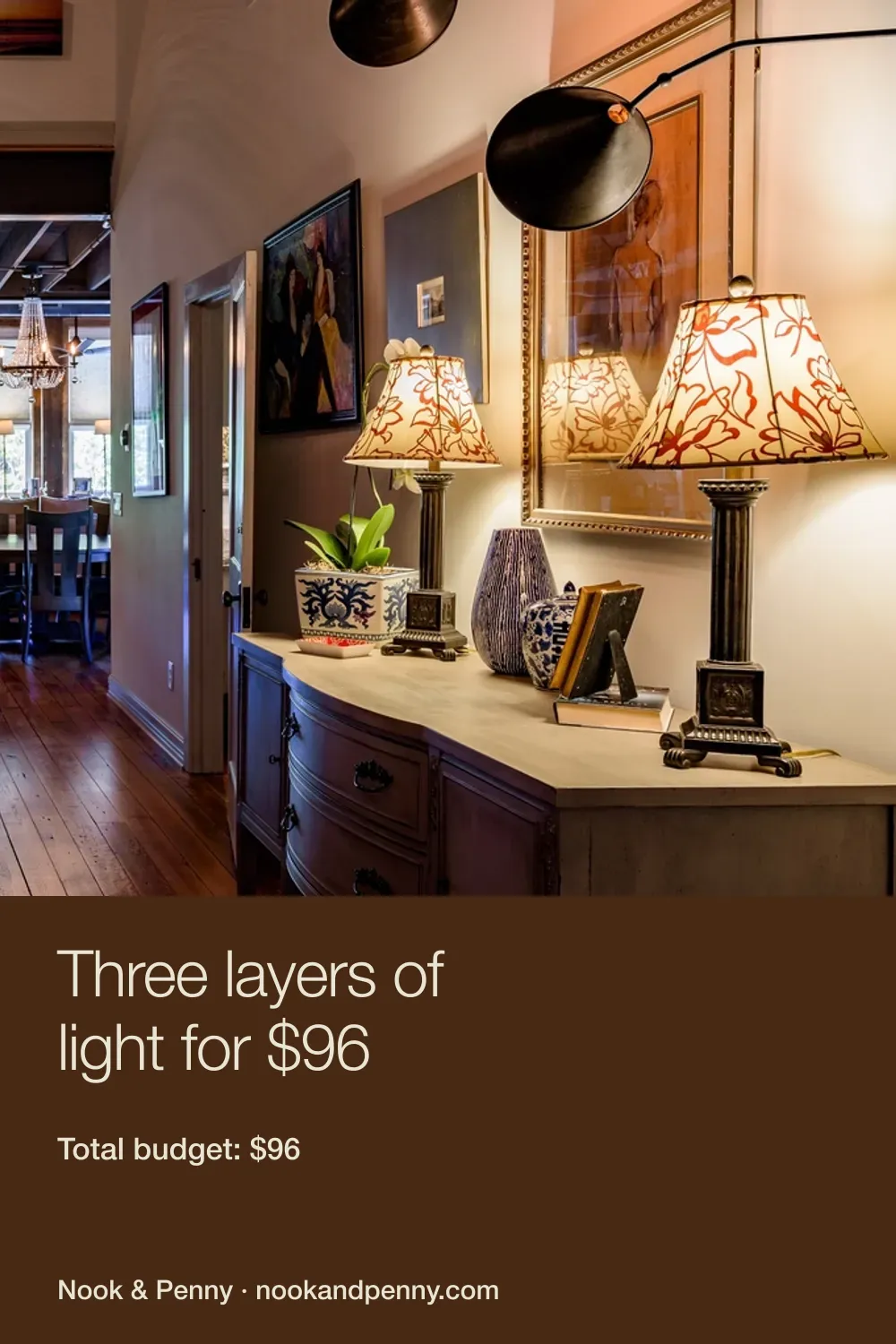
Count the lights on in your living room right now. If the answer is one — the ceiling light — that’s why the room feels flat and small. Good lighting in a small room means three layers at three heights, all in warm 2700K, and you can set it up for about $96.
The three layers
| Layer | What it does | Where | Our pick | Price |
|---|---|---|---|---|
| Ambient | Fills the room with soft, even light | Darkest corner, floor level | Floor lamp with fabric shade | ~$35 |
| Task | Light for reading or working | Beside the sofa or bed, at shoulder height | Plug-in wall sconces | ~$30 |
| Accent | Highlights one thing and adds depth | Behind the TV, on a shelf, above art | LED strip or mini lamp | ~$15 |
The ceiling light becomes the fourth layer — the one you use for cleaning, not for living.
Step 1: Fix the bulbs first ($10)
Before buying lamps, replace every bulb in the room with a 2700K LED. Kelvin is the color of the light: 2700K is warm white, like an old-fashioned bulb; 5000K is the bluish “daylight” that makes rentals feel like an office.
LEDs also run cooler. ENERGY STAR notes that incandescent bulbs release about 90% of their energy as heat, which is why LEDs are both cheaper to run and safer in fabric shades. The Department of Energy’s Energy Saver site has more on choosing efficient lighting.
Step 2: Light the darkest corner (ambient, ~$35)
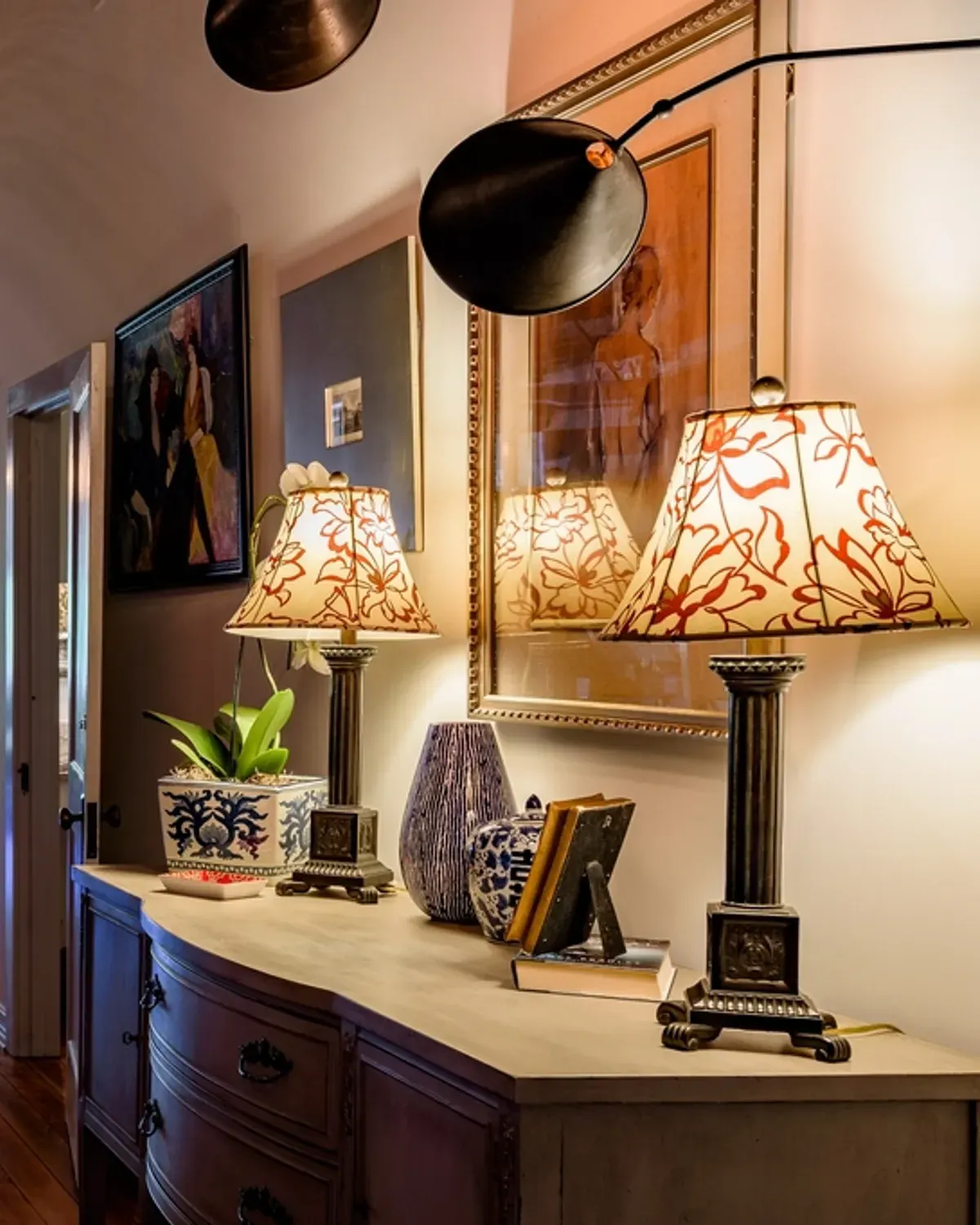
Dark corners pull the walls in. Stand in the doorway at night and find the darkest corner — that’s where the floor lamp goes. A fabric or paper shade spreads the light; a bare bulb or a metal cone makes a harsh spot.
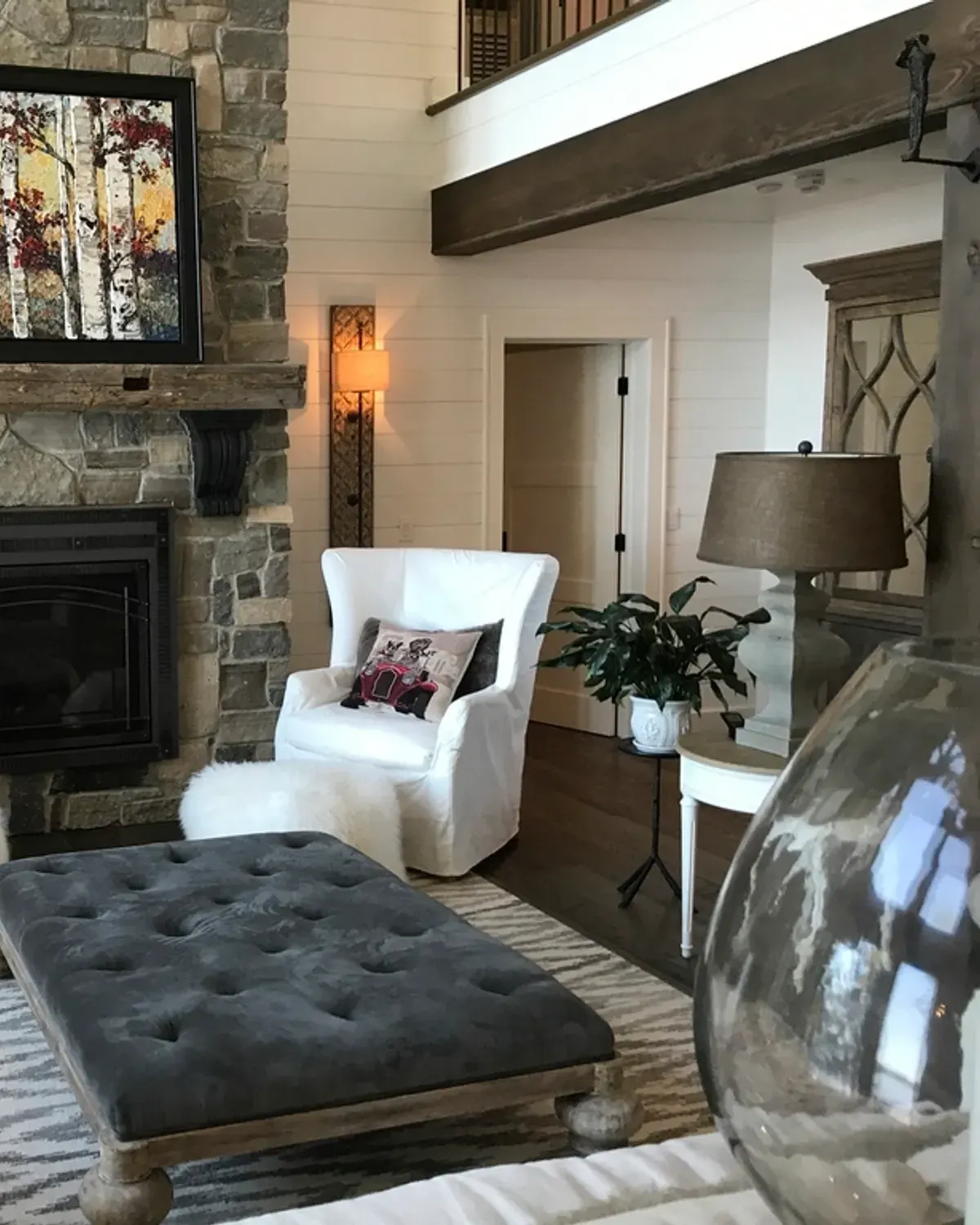
Step 3: Put reading light on the wall (task, ~$30)
In a small room, table space is precious. Plug-in wall sconces beside the sofa (or bed) give you reading light with nothing on the floor or side table. Mount them so the bottom of the shade is about at shoulder height when you’re sitting. Run the cord through a paintable cord cover.
Choose lamps with a UL or ETL listing mark — it means the design passed safety certification. Cheap unlisted lamps from marketplace sellers are the ones to skip.
Step 4: Add one accent (accent, ~$15)
One small glow adds depth: an LED strip behind the TV, a mini lamp on a bookshelf, or a rechargeable picture light over your focal point. Keep it to one or two — too many glowing things look like a store.
Step 5: One switch for everything (~$6)
The reason people use the ceiling light is that it’s one switch. A smart plug on the floor lamp (or a power strip with a switch) lets you turn on the layers just as easily.
How much light is enough?
A common rule of thumb for living rooms is 10–20 lumens per square foot across all lamps. Lumens are printed on the bulb box.
| Room size | Total lumens (approx.) | Example |
|---|---|---|
| 100 sq ft | 1,000–2,000 | Floor lamp 800 + two sconces 450 each |
| 150 sq ft | 1,500–3,000 | Floor lamp 1,100 + two sconces 450 + table lamp 450 |
| 200 sq ft | 2,000–4,000 | Two floor lamps + two sconces + accent |
Spread the lumens over several lamps. One 3,000-lumen fixture on the ceiling is brighter but looks worse.
How to read a bulb box
| On the box | What it means | What to buy for a small room |
|---|---|---|
| Lumens (lm) | How much light | 450 lm (≈ old 40W) for sconces, 800 lm (≈ 60W) for lamps, 1,100 lm (≈ 75W) for a floor lamp in a dark corner |
| Kelvin (K) | Color of the light | 2700K in living rooms and bedrooms; 3000K in kitchens and baths |
| CRI | How true colors look (0–100) | 90 or more, so wood, skin and fabrics don’t look gray |
| Watts (W) | Power used | Lower is cheaper to run — LEDs use about 8–10W for 800 lm |
| Base (E26, E12) | Socket size | E26 is the standard US base; E12 is the small “candelabra” base in many sconces |
| Dimmable | Works with a dimmer | Only matters if the lamp or switch is a dimmer |
What it costs to run
Using the U.S. average residential price of about 18 cents per kWh (EIA, August 2026) and a lamp that’s on 4 hours a day:
| Bulb | Watts | kWh per year | Cost per year |
|---|---|---|---|
| Old incandescent, 60W | 60 | 87.6 | ~$15.80 |
| LED equivalent, 800 lm | 9 | 13.1 | ~$2.40 |
That’s about $13 a year per bulb. Swap six bulbs and the $10 four-pack plus a second pack pays for itself in the first few months. Your own rate depends on your state — EIA’s table lists every state.
Three small-room lighting plans
Living room, 12×12 ft (144 sq ft → about 1,450–2,900 lm): floor lamp in the darkest corner (1,100 lm), two sconces beside the sofa (450 lm each), LED strip behind the TV (~200 lm). Total about 2,200 lm.
Bedroom, 10×11 ft (110 sq ft → about 1,100–2,200 lm): two swing-arm sconces (450 lm each), a small table lamp on the dresser (450 lm), the ceiling light for cleaning only. About 1,350 lm without the ceiling.
Studio, 400 sq ft — one lamp per zone: floor lamp in the living zone (1,100 lm), sconce or clip lamp by the bed (450 lm), desk lamp (450 lm), under-cabinet puck lights in the kitchen (3000K). Turning zones on and off is how a studio “changes rooms” at night — see studio zoning tricks.
Smart plug, smart bulb or dimmer?
| Option | Cost | Renter-safe | Good for |
|---|---|---|---|
| Smart plug | ~$6–$12 | Yes | Turning a floor lamp on with the other lamps or on a schedule |
| Smart bulb | ~$10–$15 each | Yes | Dimming and changing warmth without new hardware |
| Plug-in dimmer (cord) | ~$10 | Yes | One lamp you want dimmable |
| Wall dimmer switch | ~$20 + install | Ask first; may need an electrician | Ceiling lights |
Kitchen and bathroom lighting
These rooms follow different rules because you need to see what you’re doing:
- Color: 3000K (still warm, a bit crisper than 2700K). Avoid 5000K except in a garage.
- Kitchen: under-cabinet lights over the counter matter more than the ceiling fixture, because your body blocks overhead light while you cook. Rechargeable or plug-in strips run about $12–$30.
- Bathroom mirror: light from the sides at about face height is the most flattering; light from directly above casts shadows under the eyes. Two plug-in sconces on either side of the mirror (or one wide fixture above it, with landlord approval) fix it.
- Damp locations: in bathrooms, use fixtures rated for damp locations — it’s printed on the box or listing.
Placement heights
| Light | Rule of thumb |
|---|---|
| Wall sconce beside a sofa | Bottom of the shade about at shoulder height when you’re seated, roughly 48–60 in from the floor |
| Swing-arm sconce by a bed | About 18–24 in above the top of the mattress |
| Floor lamp next to a sofa | Bottom of the shade around seated eye level, so you see the shade, not the bulb |
| Table lamp | Lamp + table together about 58–64 in tall, so the shade covers the bulb when you sit |
| Pendant over a table | 30–36 in above the tabletop |
| Picture light | Centered over the frame, about 6 in above it |
What not to do
- Don’t mix color temperatures in one room. A 2700K lamp next to a 5000K bulb looks green and blue.
- Don’t put all the light at one height. Mix floor, shoulder and shelf height.
- Don’t point bare bulbs at eyes. Shades or diffusers on everything you see from the sofa.
The total
Bulbs $10 + floor lamp $35 + sconces $30 + accent $15 + smart plug $6 = $96. It’s the change with the biggest effect per dollar in any small room. For the rest of the room, see 9 ways to make a small room look bigger and our $200 apartment makeover.
Sources
Quick answers
Are LED bulbs worth it in a rental?
Yes. They cost about $2.50 each and, at the average US electricity price, save around $13 a year each compared with a 60W incandescent if used 4 hours a day. Take them with you when you move.
Why do my LED bulbs look blue?
They're probably 4000K–5000K. Look for 2700K ('warm white' or 'soft white') on the box for living rooms and bedrooms.
How many lights should a small living room have?
At least three light sources at different heights, plus the ceiling light: a floor lamp, a table lamp or sconce for reading, and one small accent light.
What color temperature is best for a living room?
2700K (warm white) for living rooms and bedrooms. 3000K works in kitchens and bathrooms. Avoid 5000K 'daylight' bulbs in living spaces — they feel like an office.
How many lumens do I need?
A common rule of thumb for living rooms is 10–20 lumens per square foot in total. A 120 sq ft room needs roughly 1,200–2,400 lumens spread across several lamps, not in one ceiling fixture.